Swinburne University of Technology and Siemens are undertaking first-of-its-kind research in Australia into how quantum-enhanced timing can help future-proof the energy grid and increase its stability.
The study comes as Australia’s energy mix continues to shift toward renewables, distributed energy resources and inverter-dominated networks that place greater pressure on ensuring regular flow of energy.
The project brings together QuantX Labs’ advanced quantum clock and quantum-secured time transfer capabilities with Siemens’ globally renowned PSS E technology, used in over 145 countries worldwide, and the Siemens Swinburne Energy Transition Hub, a real-time digital twin of Australia’s energy system.
Related article: Aussie team’s world-first quantum battery breakthrough
Today, grid functions rely on satellite-based timing signals, including Global Navigation Satellite Systems (GNSS), which can be vulnerable to disruption, interference or cyber threats. As the power grid becomes more decentralised and complex, precise timing is increasingly critical for system protection, monitoring, and continuous power supply.
This research will examine how quantum-enabled timing technologies could provide a more resilient approach for future grid architectures and a reliable alternative to current satellite-based timing technologies.
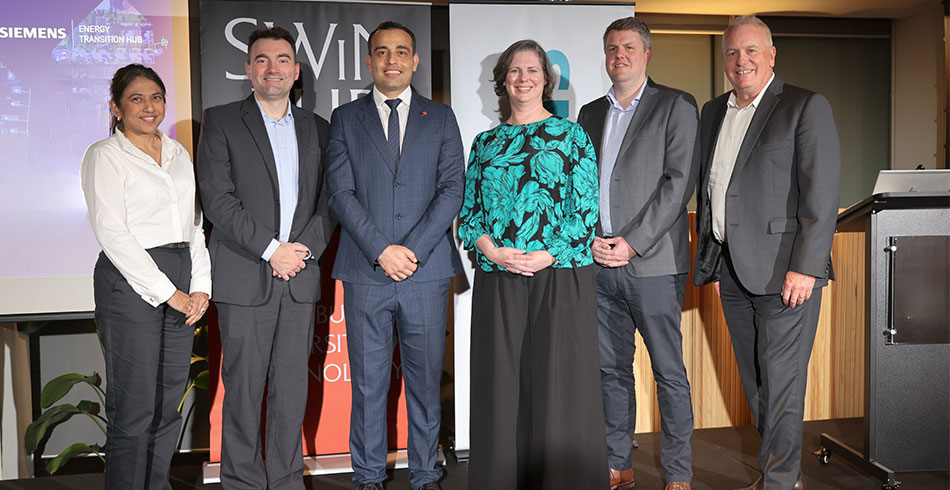
Swinburne will use PSS E technology to simulate grid scenarios using quantum timing technology. The announcement was made at the Siemens PSS®E Customer Days event that empowers grid planning professionals with the latest global innovations.
Siemens head of grid software Jose Moreira said, “The research sits at the intersection of next-generation quantum technologies and future energy systems. It explores how ultra-precise timing can shape the future grid.
“By combining Siemens’ leadership in grid simulation with Swinburne’s energy industry research capability, we are helping the industry address today’s challenges while preparing for the next generation of energy networks.”
Siemens’s partnership with Swinburne was strengthened in 2023 with the launch of the Siemens Swinburne Energy Transition Hub—a future energy grid laboratory open to students, academia and industry. It uses some of Siemens’ most advanced digital technology to address Australia’s renewable energy transition challenges.
Siemens–Swinburne Energy Transition (SSET) Hub director Professor Mehdi Seyedmahmoudian said, “This research is exploring an area that is still largely uncharted globally. As power systems become more distributed, dynamic and complex, precise and resilient timing will play an increasingly important role in maintaining stability.
Related article: Quantum batteries could supercharge our energy future
“Through our collaboration with Siemens, we are investigating how emerging quantum technologies can support next-generation energy networks, while also demonstrating how the SSET Hub translates ideas into real-world impact.”
Professor Allison Kealy, another key expert from Swinburne’s team of researchers, added, “Advancements in quantum technologies will bring greater confidence in precision, timing and trust in critical infrastructure, including energy systems.”