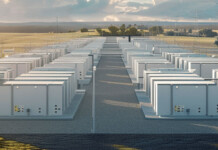
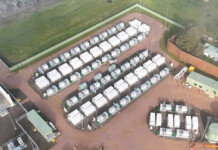
ENGIE recently completed a second major upgrade at Pelican Point Power Station in South Australia, converting one of its two combined cycle gas turbines to an open cycle configuration—allowing the plant to support the state’s renewables.
Located just 20km from Adelaide’s CBD in Outer Harbour, Pelican Point Power Station has been a cornerstone of South Australia’s energy system since its commissioning in March 2001.
The gas-fired power station delivers 522MW under normal operation, with peak output reaching 532MW. It has provided on average nearly 50% of the South Australia’s thermal generation needs over the past four years, making it a key contributor to reliability.
After the recent upgrades, Pelican Point now combines Open Cycle Gas Turbine (OCGT) and Combined Cycle Gas Turbine (CCGT) technology. Two gas turbines and a steam turbine work together, with waste heat now recovered to produce steam for additional generation, improving efficiency and reducing emissions.
Beyond its generation capacity, Pelican Point plays a vital role in supporting renewable energy integration and grid stability. With South Australia leading the nation in renewable penetration, fast-start gas generation is essential to balance variable wind and solar output, maintain frequency control, and provide firming capacity during peak demand or periods of low renewable energy generation.
With its strategic location and flexible operation, Pelican Point remains a critical asset in ensuring energy security while enabling South Australia and the National Electricity Market’s transition to a cleaner, more sustainable energy future.
Related article: Engie acquires full ownership of Hazelwood BESS
Supporting solar and wind
Carried out between June and November 2025, the upgrade was designed to make the nearly 25-year-old power station more flexible and responsive.
ENGIE worked with Baltec IES under an Engineering, Procurement, and Construction (EPC) contract as principal, while GPA Engineering acted as the principal’s owner engineer.
Together, these two partners brought the expertise needed to bring a 25-year-old power station to the cutting edge of flexibility.
The conversion allows Pelican Point to start and ramp up much faster, improving its ability to provide gas peaking power, especially during mornings and evenings—when solar power generation drops, and demand rises as people get home and turn on lights and appliances.
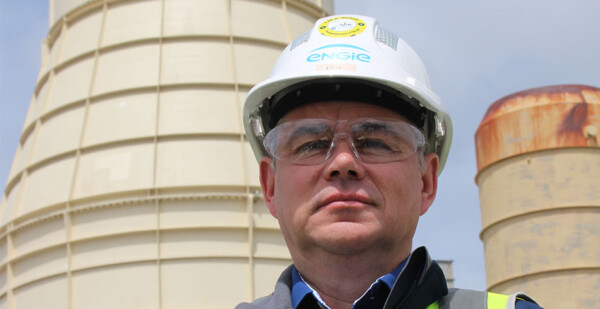
As ENGIE general manager operational assets—flex power Liam Ellis explains, “Gas-fired power stations are critical to the energy transition, backing up renewables and helping keep the lights on. These works will allow the power station to start up quicker and better support high levels of solar power during the day.”
While gas will eventually be phased out, upgrades like this ensure existing assets operate reliably and efficiently, supporting renewables and maintaining system stability during the transition.
This project is part of ENGIE’s broader strategy to combine fast-response generation with cutting-edge storage on the site. Construction of the large-scale 200MW/400MWh Pelican Point Battery alongside the power station began in November 2025.
When the battery is commissioned in late 2027, it will create a hybrid, future-ready site that will deliver capacity, flexibility, and resilience to South Australia’s grid.
Upgrading the GT11 combined cycle gas turbine
When the Pelican Point Power Station was built in 2000, ENGIE SA engineering controller Philip von Einem—who was part of the construction team—said the GT11 gas turbine was run as open cycle turbine using a fixed temporary bypass stack. Once the power station was commissioned, the temporary stack was removed and the gas turbine was connected to a heat recovery steam generator, allowing for continuous combined cycle operation for higher efficiency.
The recent upgrade was all about flexibility. A mechanised Diverter Damper Bypass Stack was installed in the same position as th temporary stack. This smart addition means the gas turbine can now switch between open cycle for fast starts and combined cycle for efficiency, giving the power plant more options to respond to changing demand and better support grid stability.
Engineered solution solves weighty challenge
Building the 40m-tall bypass stack at Pelican Point was no small feat. The biggest of the metal sections weighed over 60 tonnes—about the same as five Adelaide buses—and had to be lifted by a 700-tonne all-terrain crane, one of only a few in Australia.
The crane itself posed a challenge: its massive weight, amplified when lifting the huge stack sections, risked cracking the power station’s roads and footpaths, which it was sitting on. To solve this, engineers installed eight 20m encased piles for each of the crane’s outrigger ‘foot’ positions to create special foundations strong enough to handle point loads of almost 200 tonnes.
Space was tight, and timing was tighter. The entire installation had to fit into a five-week outage window, with civil works, stack assembly, and control integration all completed without compromising the power station’s availability. Preassembly and smart construction sequencing allowed the team to lift, place and bolt all of the 40m stacks sections together in just 10 days after two weeks of foundation work.
Preparation started a year earlier—strengthening foundations, planning crane positioning, and staging components—so when the window opened, everything ran smoothly.

Related article: Robotic installation crew sets pace at ENGIE solar farm
Memorable milestones
Asked about project highlights, the team said a standout moment was when all the bypass stack components arrived onsite—their sheer size made the installation space look tiny.
Another unforgettable milestone? The 40m lift of the 66-tonne diverter damper sector over existing power plant infrastructure. It was a precision job that showcased serious engineering muscle and technical expertise from the crane operator and crew.
For project manager John Dunbar, the best moment was seeing the diverter damper operating seamlessly in both open and closed cycle modes with the GT11 gas turbine as proof the upgrade delivered exactly as promised.
A flexible future
What might sound like a routine upgrade is game-changing: the combination of the bypass stack project, purge credit upgrade, and fast ramp rate upgrade has transformed one of Pelican Point Power Station’s gas turbines from a traditional baseload unit into a highly flexible unit.
It can now switch between open and combined cycle, ramp output quickly to meet market demand, and use purge credits to cut start-up time.
In short, a 25-year-old turbine now operates like a modern peaking plant, critical for backing up renewable energy and keeping the grid stable in South Australia and the National Electricity Market.