The Australian Renewable Energy Agency (ARENA) is pledging more than $12 million in funding to some of Australia’s largest product manufacturers to trial low emission heat-processing technologies and reduce industrial emissions.
McCain Foods, Sugar Australia and Blackmores are some of the companies to receive funding as part of ARENA’s efforts to ease reliance on natural gas for heat processing.
Related article: Solar thermal demonstrator to target industrial heating
The projects build on ARENA’s existing efforts in decarbonising food manufacturing, which aim to support Australia’s transition to renewable energies and meet 2030 and 2050 net zero targets.
ARENA chief executive officer Darren Miller said programs like ARENA’s Industrial Transformation Stream (ITS) are vital in supporting manufacturers to increase their uptake of clean technologies.
“Achieving Australia’s emissions reduction goals requires that our energy-intensive industries and manufacturers develop and execute clear strategies to integrate renewable energy into their operations,” Miller said.
“These grants are designed for forward-thinking businesses ready to pioneer and incorporate new applications of renewable energy technologies.
“By assisting in the adoption of clean technologies in heat processes in Australia’s food, beverage and pharmaceutical sectors, these projects will provide a blueprint for similar businesses to replicate and scale up these solutions nationwide.”
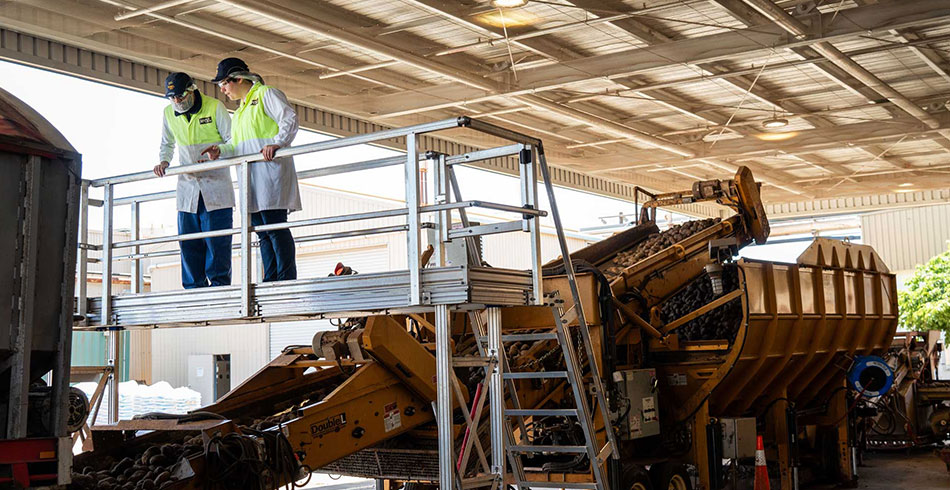
McCain Foods has received $7.38 million in ARENA ITS funding to establish two interconnected heat recovery systems at its Ballarat potato processing site.
The first system will decrease boiler demand by recovering high-temperature heat from condensate, while the second system produces hot water by using an electric mechanical vapour recompression (MVR) system to turn captured fryer exhaust heat to steam.
Related article: MGA Thermal achieves world-first renewable industrial steam
Emission reductions are expected to lower the site’s natural gas boiler load by 22% using the dual-action system.
The project will demonstrate the commercial readiness of MVR for industrial heat applications, and serve as a blueprint for the technology’s implementation across Australian industries if successful.