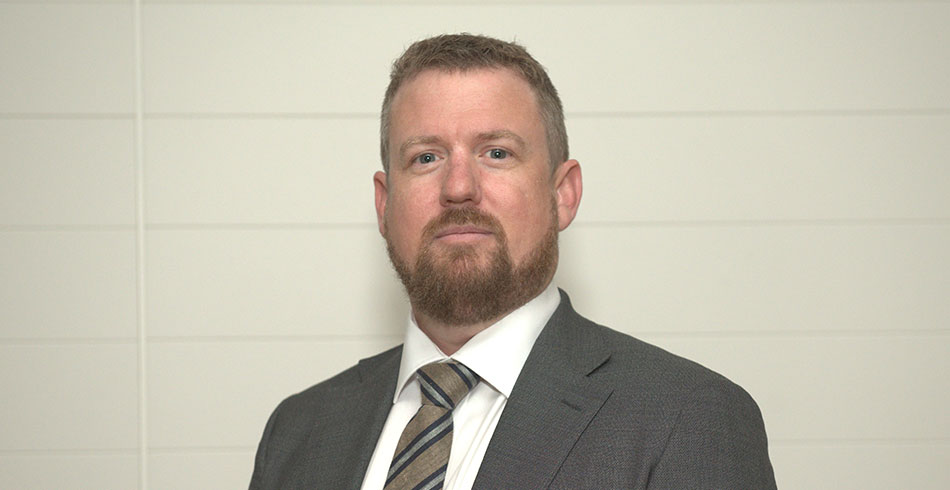
Energy Source & Distribution gets to know Global Power Energy founder and CEO Greg Elkins.
Greg, please tell us a bit about yourself:
I’m an electrical engineer by background, but my career has always sat at the intersection of engineering, commercial, regulation, and customer outcomes. I started in a small strategic advisory consultancy, focused on planning and expansion of the power system where I learned early that achieving the best outcomes requires more than just good technical design, it requires a whole-of-system view across commercial and regulatory frameworks as well.
I’ve since worked across Ergon Energy, Energy Queensland, and AEMO, where I developed a strong customer focus and a passion for business development and system-wide optimisation. Throughout that journey, I became increasingly driven by a simple question: How do we deliver the best long-term outcome for customers and the grid, at the lowest whole-of-system cost?
Personally, I’m very family focused. I have a wife and five children, with another on the way, which keeps life busy and grounded. Outside of work, I enjoy travel, camping, music, and playing guitar.
Related article: 5 Minutes With: Carbon280 CEO Mark Rheinlander
What led you to found Global Power Energy?
Across my roles, I repeatedly saw that achieving genuine optimisation—which means balancing cost, reliability, and long-term community benefits—requires deep commercial understanding alongside strong engineering. While there are many good intentions across everyone driving this transition, I felt there were structural limitations in how energy policy, grid connections, planning, and regulatory decisions were being approached. My move from Energy Queensland to AEMO was driven by a desire to improve connection processes at a national level. However, it became clear that many of the changes needed couldn’t be achieved from within a single institutional perspective.
These perspectives were the catalyst for founding Global Power Energy. Today, we’ve built a team with over 500 years’ experience across technical, regulatory, and commercial domains in just our leadership and specialist teams, with around 50 staff all up. What I enjoy most is learning from people who have “been there and done it” and gradually expanding our influence. We’re now contributing not just technically, but across regulatory reform, commercial strategy, and increasingly policy discussions.
What are some recent projects the team has been involved with here in Australia?
Our work spans a broad range of projects across the energy transition. This includes supporting connections for large-scale generation, such as multiple 2GW+ pumped hydro projects and long-duration so 8-hour BESS developments, alongside other renewable developments. We’ve also advised over 5GW and $6 billion in project go-no-gos.
We’re heavily involved in strategic advisory, particularly in helping the market better understand the system impacts of large computing loads and data centres, including network use-of-system strategies.
On the regulatory side, we are advising on reforms to improve the current connection process and supporting regions such as the Pilbara as they transition toward higher penetrations of renewable energy. Our team is also contributing to strategic power system planning for the transition bringing flexible, forward-looking thinking to both technical and commercial challenges.
You recently took part in a panel discussion at the IEEE Conference in Austin, Texas. What commonalities are you seeing between Australia and the US energy transitions?
There are many similarities. Both markets are experiencing long connection timelines, high construction costs, and rapid growth in batteries and data centres with the U.S. somewhat ahead on the data centre front. In both countries, regulatory frameworks that prioritise just-in-time investment are unintentionally slowing the pace of transition and increasing overall cost. While the specific market structures differ, the underlying challenges are remarkably consistent. One clear contrast is open access versus firm access approaches to transmission. While the outcomes differ, the core issues of uncertainty, timing mismatches, and coordination between generation and transmission are shared across both markets.
What are some of the biggest challenges facing renewables developers and TNSPs right now?
What’s often overlooked is that this is not just an energy transition, it’s an economic one. Our regulatory and market frameworks were designed for incremental load growth and marginal fuel-based costs, where transmission was built primarily to serve increasing demand. And this worked because the power system was first built on the government’s balance sheet, costs were low because mainly op-ex and incremental expansion was passed through to bills.
And now we’re rebuilding the energy grid using the old investment logic—a steady-state equilibrium model based on op-ex cost recovery. But we’ve shifted to perpetual capital deployment, with both capex and op-ex being recovered from consumers. None of the reforms proposed today address that structural economic shift.
Then, add to that generation is increasingly remote from load centres and transmission is now being built for generation, not load. Yet revenue recovery mechanisms and planning frameworks were never designed for these new structures. The result here is delayed transmission investment and generators that are too often required to connect and accept curtailment. All this is driving bills higher for consumers.
Beyond transmission, a key challenge is ensuring energy security and resilience. This means providing sufficient firming through storage, whether hydro, BESS, or gas, to manage increasing uncertainty from climate impacts and evolving demand profiles, particularly from large industrial and data-driven loads. We’re also quite concerned about the complete absence of an AI integration strategy into the grid, from both a technical risk perspective and a planning one.
Related article: 5 Minutes With: ENGIE Australia’s Laura Caspari
What do you enjoy doing when you’re not working?
With a large and growing family, most of my spare time is spent at home.
Over the past year, we’ve been renovating our house and made the decision to live in a caravan and travel, which has been a fantastic experience. In 2025, we travelled to Western Australia both to explore the country and to establish a Global Power Energy office in Perth. We’ve also travelled through South Australia, New South Wales along the Murray, up to the Daintree in North Queensland, and back through western Queensland via the Dinosaur Trail.
Outside of travel and camping, I’m passionate about music and playing guitar when I get the chance.